Live streaming and webinars are often treated as separate formats. One sounds broad, public, and production-led. The other sounds structured, registered, and marketing-led.
In practice, the line is blurrier than that.
A webinar can be live-streamed. A live stream can include registration, Q&A, CTAs, replay, and follow-up. A webcast can look like either one depending on the audience, level of interaction, and platform behind it.
For B2B teams, the useful question is not which label sounds more polished. It is which format gives you the right balance of reach, interaction, audience signals, conversion moments, replay value, and follow-up.
Quick answer: when to use a webinar, live stream, or webcast
Use a webinar when the session needs registration, a defined audience, attendee interaction, and follow-up. Webinars are usually strongest for product demos, workshops, thought-leadership sessions, customer panels, training, and recurring marketing programs where the team needs to know who attended and what they did.
Use a live stream when the priority is reach, broadcast polish, embed flexibility, or public distribution. Live streams are useful for launches, announcements, executive sessions, community broadcasts, and moments where the audience may be larger or less tightly qualified.
Use a webcast when the session is mostly one-to-many and needs a controlled broadcast experience at scale. Webcasts are often used for town halls, investor-style updates, large customer announcements, or event-style presentations where audience interaction exists but is not the main point.
Separate three decisions: the event workflow, where you distribute it, and when viewers watch. A webinar describes the structured event workflow. Live streaming describes real-time delivery, which may use an owned registration and watch page, a public destination, or both. Recorded delivery is a separate choice; it does not make the event less of a webinar.
For delivery timing, compare automated webinars vs live webinars. Then choose the workflow and distribution that suit the job the event needs to do.
| Goal | Usually strongest fit | Why |
|---|---|---|
| Educate qualified prospects | Webinar | Registration, Q&A, CTAs, and follow-up matter |
| Reach a broader public audience | Live stream | Distribution and broadcast access matter |
| Deliver a controlled one-to-many session | Webcast | Scale and presenter control matter |
| Run a product demo or workshop | Webinar | Interaction and attendee context matter |
| Launch a product publicly | Live stream or webinar | Choose based on whether reach or lead capture matters more |
| Build a recurring growth program | Webinar-style live broadcast | The workflow needs signals, replay, CTAs, and learning |
What is the difference between live streaming and webinars?
Live streaming is a delivery format. It means video is broadcast live over the internet so viewers can watch as it happens. A live stream may be public or private, embedded on a branded page, distributed through social platforms, or hosted inside a dedicated live broadcasting platform.
A webinar is a structured online event. It usually includes registration, reminders, a defined topic, one or more presenters, audience interaction, and follow-up after the session. The webinar may use live streaming technology, but the format is shaped around education, participation, and next steps.
That distinction keeps the choice practical. Decide what registration, participation, and follow-up the event needs, then choose where and how to deliver the video. A live stream can support the same event workflow as a webinar when the platform and configuration provide it.
The Brown Event Strategy virtual event comparison guide makes a similar practical distinction between meetings, webinars, and livestream-style delivery by looking at roles, interaction, Q&A, chat, polling, and recording. The point is not that one label is universally better. The point is that each format gives the audience and production team a different operating model.
SproutVideo also frames the difference around factors like audience size, registration, engagement tools, delivery, and video quality in its guide to live streams vs webinars. Those distinctions are useful, but modern B2B platforms increasingly combine the two.
That is why a B2B team should choose based on the workflow, not the dictionary definition.
Webinar vs webcast: why the related term matters
Webcast is another term that often appears in the same decision.
A webcast is usually a more broadcast-style online presentation. It tends to be more one-to-many, more controlled by presenters, and less dependent on live audience participation. A webinar is usually more interactive and more tied to registration, attendee questions, polls, CTAs, and follow-up.
There is still overlap. A webcast can have Q&A. A webinar can be broadcast to a large audience. A live stream can include webinar-style engagement.
The practical difference is emphasis:
| Format | Primary emphasis | Typical B2B use |
|---|---|---|
| Webinar | Structured education and audience interaction | Demos, workshops, lead generation, customer education |
| Webcast | Controlled one-to-many broadcast | Executive updates, announcements, large presentations |
| Live stream | Real-time video distribution | Launches, public broadcasts, branded live sessions |
If your team needs to know who registered, what questions they asked, which CTA they clicked, whether they returned for the replay, and what follow-up should happen next, you are probably closer to a webinar or webinar-style live broadcast.
If the goal is mostly to deliver a polished message to a broad audience, a live stream or webcast may be enough.
Choose based on the job the event needs to do
Set your webinar goals before choosing the format. Decide what the audience should learn or do and what evidence your team needs to assess that goal.
If the job is reach, prioritize access and distribution. You may care more about embedding the stream, sharing it widely, and making the live experience feel polished than about collecting detailed engagement data from every viewer.
If the job is education, prioritize structure. The audience needs a clear promise, a registration path, reminders, a strong opening, useful examples, and time to ask questions.
If the job is qualification, prioritize audience signals. Registration fields, attendance, watch time, questions, polls, CTA clicks, and replay behavior can all help the team understand which viewers need follow-up and which need more education.
If the job is conversion, prioritize the next step. A live session should not rely on a vague closing slide. It should make the next action clear while attention is still fresh.
If the job is learning, prioritize analytics. The team should be able to look back and see what attracted the right audience, where attention held, which prompts worked, and what should change before the next session.
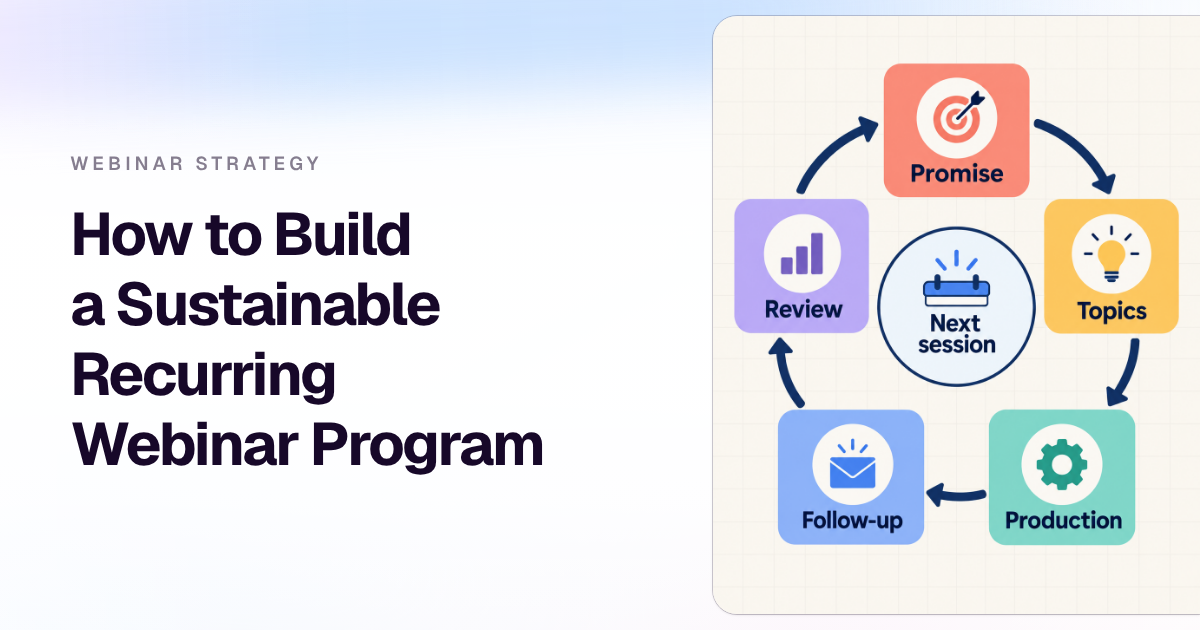
This is the shift behind the B2B webinar growth engine: the live session is not the finish line. The value comes from the loop around it.
The B2B growth workflow comparison
The strongest format is the one that supports the whole workflow around the live session.
Registration and reminders
Webinars usually have the advantage here because they start with a known attendee. A good webinar registration page does more than collect an email address. It sets expectations, qualifies interest, and gives the team the first signal about who is likely to attend.
Live streams can use registration too, especially when they are embedded on a branded page or gated behind an event signup flow. Public social distribution gives viewers another way to watch, but distributing video to LinkedIn does not by itself create an owned registrant record, verify a CTA outcome, or start CRM follow-up.
Use the LinkedIn Live RTMP setup guide for the distribution steps. If you also need attendee records, give viewers an owned registration and watch-page path, configure the next step, and assign someone to verify the handoff. The webinar multistreaming guide explains how to plan that home base alongside public destinations and their separate moderation and measurement.
Watch page and brand control
Production quality, audience access, and brand presentation depend on the platform and setup. Check the studio controls, supported destinations, and watch-page options for the experience you want, whether you call the event a webinar or a live broadcast.
For B2B teams, the best setup is often a branded broadcast experience with webinar-style mechanics layered in: registration, reminders, interaction, CTAs, replay, and analytics. A browser-based streaming studio can help teams create that experience without building a heavy production stack.
Engagement and questions
Webinars are built for participation. Q&A, chat, polls, reactions, and resource prompts help the audience respond instead of passively watching.
That does not mean every webinar should be overloaded with interaction. The goal is not to make viewers busy. The goal is to create useful participation that helps the host teach better and helps the team understand what matters.
This is where audience intelligence in live streaming becomes important. A question, CTA click, replay return, or resource download is more useful than attendance alone because it adds context to the viewer's interest.
CTAs and next steps
A live event is one of the few moments when the audience is paying attention at the same time. That makes the CTA decision important.
The CTA should match the moment. A product demo may point to a trial, booking, or pricing page. A thought-leadership session may point to a related guide, replay, template, or follow-up session. A launch broadcast may point to a product page or announcement hub.
HeyStream's conversion tools let teams configure next steps for live and replay viewing. Enable and check the CTA for each viewing experience you intend to use. A click shows that someone followed the link; confirm a completed booking or other outcome in the destination system. For more examples, see these webinar CTA examples.
Replay and on-demand viewing
Webinars and live streams both create replay value, but many teams underuse it.
A replay should not be treated as an archive. It can be a second conversion surface, a follow-up asset, a sales enablement resource, and a way to keep learning from viewers who could not attend live.
A good webinar replay strategy separates live attendees from replay viewers. The person who returns to watch after the event may need a different prompt than someone who attended live and clicked the CTA.
Follow-up and audience records
This is where webinars usually have the clearest B2B advantage. If the team knows who registered, attended, asked a question, clicked a CTA, watched the replay, or skipped the session entirely, follow-up can be more relevant.
Use observed behavior to make follow-up relevant. Someone who asked a specific product question may need a different reply from a no-show. A replay viewer should not be treated as if they ignored the event. Attendance, questions, clicks, and replay viewing add context; none alone proves buying intent or a completed commercial outcome.
That is why webinar follow-up best practices should connect directly to audience records, signals, and automation. HeyStream's audience intelligence and follow-up automation help keep that context closer to the broadcast workflow.
Analytics and learning
The best live programs improve over time.
That only happens when the team can see more than surface-level attendance. They need to understand which topics attracted the right audience, which sections held attention, which CTAs worked, which replay moments mattered, and what follow-up path made sense.
That is where analytics and insights turn the format decision into a learning system. The goal is not simply to prove one session worked. It is to make the next session stronger.
How to decide which format fits your next session
Use this checklist before choosing the format.
Who needs to attend?
If the audience is broad and public, a live stream may fit. If the audience is qualified, registered, or segmented, a webinar-style workflow is usually stronger.What do you need to know about viewers?
If you only need reach and attendance, a public live stream may be enough. If you need registration data, questions, engagement signals, CTA clicks, replay behavior, and follow-up context, use a webinar workflow.How much interaction does the session need?
If interaction is central to the value of the session, choose the format that supports Q&A, chat, polls, resource prompts, and in-session CTAs.What should happen after the live moment?
If the session needs replay, segmentation, sales handoff, nurture, or behavior-based follow-up, do not choose a format that leaves those steps disconnected.Will this happen again?
If this is a recurring webinar program, product demo series, or monthly live show, choose the workflow that helps each session improve the next one. Repeatability matters more than one-off production polish.
Where HeyStream fits
Once you know which workflow you need, use the webinar platform evaluation guide to check registration, interaction, replay, and follow-up in a practical demo.
HeyStream is useful when a B2B team wants live-broadcast polish and webinar-growth mechanics in one workflow.
That means teams can create branded live broadcasts, host registration and watch pages, add CTAs during live and replay viewing, track audience signals, review analytics, and trigger follow-up from the behavior around the session.
In other words, HeyStream sits in the overlap. It is not only a place to stream, and it is not only a traditional webinar tool. It is built for teams that want the live session to create a clearer path to action.
If your session only needs public reach, a simple live stream may be enough. If your session needs audience context, interaction, replay, conversion moments, and follow-up, choose the format that supports the whole growth workflow.
The label matters less than the system around it.