A webinar topic is not just a title idea. It is the first decision that shapes who registers, what they expect, how useful the live session feels, and what your team can do with the audience signals afterward.
That is why generic webinar topic lists often fall short for B2B teams. They can help you brainstorm, but they rarely answer the harder question: will this topic attract the right audience, support a meaningful live session, and create a useful next step?
The better approach is to choose webinar topics like a growth workflow. Start with a specific audience problem, make sure the topic deserves a live format, connect it to a relevant CTA, and decide what you want to learn from registration, attendance, questions, clicks, and replay behavior.
Why webinar topics matter before promotion starts
Promotion can only amplify the promise you give it. If the topic is vague, the invite has to work too hard. If the topic is specific, the promotion plan gets sharper because the reader can quickly tell whether the session is for them.
A strong topic also improves the rest of the webinar workflow. It influences the landing page, speaker framing, live questions, CTA timing, replay value, and follow-up context. That is why topic selection belongs at the start of the B2B webinar growth engine, not as a last-minute naming exercise after the campaign is already planned.
The broader B2B content picture points in the same direction. Content Marketing Institute's 2026 B2B research emphasizes content relevance, quality, strategy refinement, customer understanding, and measurement as practical questions for B2B marketing teams. Webinar topics should be held to the same standard: relevant enough to earn attention, specific enough to guide action, and measurable enough to learn from.
What makes a strong B2B webinar topic
A demand-creating webinar topic is a live-session idea built around a specific audience, a real business problem, and a next step that makes sense after the session.
That does not mean every topic needs to be narrow. It means the audience should understand why this session is worth attending now, why a live format adds value, and what they might do afterward.
A strong B2B webinar topic usually has six traits:
- It names a clear audience or situation.
- It solves a problem the audience already recognizes.
- It has a reason to be live, such as Q&A, examples, teardown, demo, panel, or expert discussion.
- It connects naturally to a business outcome without promising guaranteed results.
- It supports a clear CTA, resource, demo path, replay, or follow-up motion.
- It gives the team useful signals about audience interest.
For example, "AI for marketing" is broad enough to attract curiosity, but it is hard to promote and harder to follow up on. "How B2B demand teams can turn webinar questions into follow-up segments" is more specific. It names the audience, the workflow, the live-session value, and the signal your team wants to capture.
The B2B Webinar Topic Test
Use this scorecard before you commit to a topic. You do not need a perfect score, but weak answers show where the idea needs sharpening.
| Criterion | Question to ask | Strong signal |
|---|---|---|
| ICP pain | Who feels this problem now? | A specific role, team, market, or maturity stage can see themselves in the topic. |
| Buying trigger | What makes the topic urgent? | There is a change, campaign, launch, problem, or decision creating pressure. |
| Live value | Why should this be a webinar instead of a blog post? | The session benefits from Q&A, examples, teardown, demo, or discussion. |
| Speaker credibility | Who can teach this well? | The speaker has real experience, useful examples, or strong audience trust. |
| CTA fit | What next step follows naturally? | The CTA feels like help, not a hard pivot into a sales pitch. |
| Replay value | Will it still help after the live date? | The recording can become a useful evergreen asset. |
| Follow-up signal | What audience behavior would matter afterward? | Questions, poll answers, CTA clicks, replay visits, or registration answers reveal useful context. |
This test keeps topic selection practical. You are not trying to prove the topic will generate pipeline by itself. You are checking whether the idea is strong enough to support registration, live engagement, and the next step after the session.
Webinar topic examples by business goal
The best topic depends on the job the webinar needs to do. A customer education session, a launch event, and a demand-generation webinar should not all be judged by the same criteria.
For new market contact, use problem-aware educational topics. These work when the audience is still learning how to frame the issue. Examples include:
- "How to build a webinar topic calendar without repeating the same themes"
- "What B2B marketers should measure before calling a webinar successful"
- "How to plan a live session around buyer questions, not internal messaging"
For product launches, use change-driven topics. The session should explain why the change matters, what the audience can now do differently, and how the product fits into that shift. Examples include:
- "How product teams can launch a feature with live customer education"
- "What changes when webinar follow-up starts before the event goes live"
- "How to turn a release announcement into a practical live workshop"
For demo demand, use workflow and use-case topics. The topic should make the product relevant without making the whole session feel like a pitch. Examples include:
- "How to run a product demo webinar that shows who is ready for follow-up"
- "How demand teams can use live CTAs during product walkthroughs"
- "How to move demo viewers from replay to the right next step"
For customer education, use adoption and best-practice topics. These help users get more value and can also reduce support friction. Examples include:
- "How to turn your first webinar replay into a follow-up asset"
- "How to structure registration questions for better post-event context"
- "How to review webinar engagement before planning the next session"
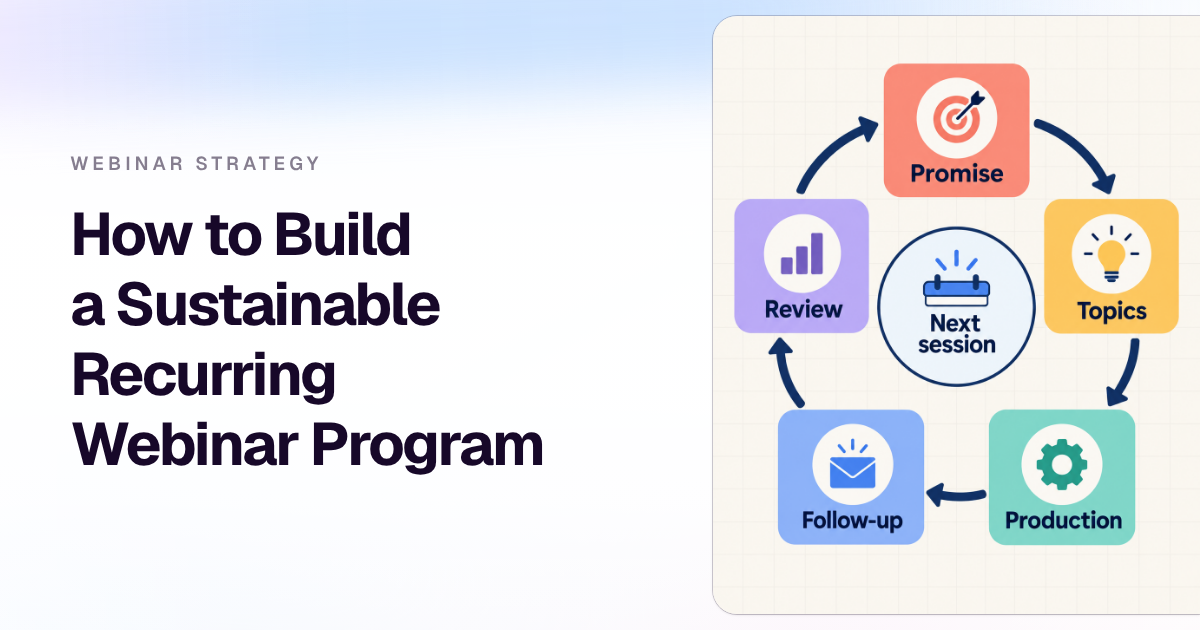
For repeatable programs, use themes that can grow over time. A recurring webinars program needs topics that can repeat without becoming generic: monthly teardown sessions, customer panels, expert clinics, product office hours, or live playbooks tied to a specific audience problem.
How to validate webinar topics before you commit
A topic does not need perfect evidence, but it should survive a few checks before your team builds the campaign around it.
Start with search intent. Look at the phrases people use, the kinds of pages ranking, and the questions that appear around the topic. If every result is a generic idea list, you may have room to win with a sharper framework. If the results are mostly tool comparisons, your educational topic may need a more commercial angle.
Then check customer-facing signals. Sales calls, support questions, onboarding gaps, community posts, customer success notes, and product feedback can all reveal what your audience is actually trying to solve. A topic that appears in both search and customer conversations is usually stronger than a topic chosen only because it sounds timely.
Finally, check whether the topic has a real campaign path. Can you write a clear invite? Can you build useful webinar registration pages around the promise? Can you create a follow-up segment based on attendance, questions, CTA clicks, or replay behavior? Can the replay stand on its own?
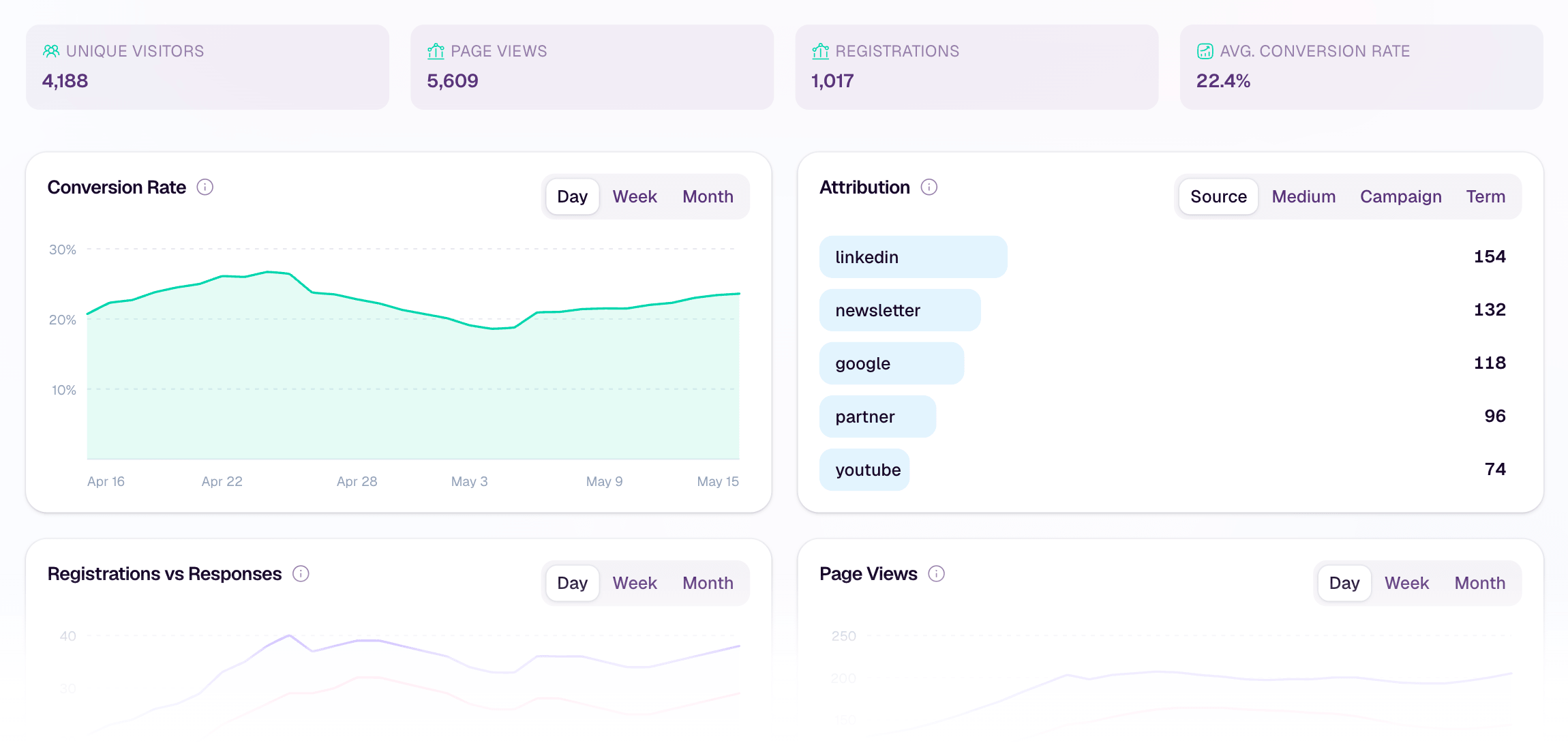
Benchmark publishers such as ON24 frame webinars and digital experiences as measurable engagement channels. That is the useful planning lesson here: topic choice should consider what you want to learn from the session, not only how many people you hope will register.
How to turn broad webinar ideas into stronger topics
Broad ideas are useful starting points. They become stronger when you add audience, situation, live value, and next step.
| Broad idea | Stronger B2B webinar topic | Why it works |
|---|---|---|
| AI for marketing | How B2B demand teams can use webinar questions to shape follow-up segments | Names a team, a workflow, and a practical post-event action. |
| Product launch best practices | How to plan a live product launch that creates usable audience signals | Connects launch content to engagement and follow-up. |
| Webinar analytics | What to review after a webinar before planning the next topic | Turns reporting into a decision workflow. |
| Lead generation webinars | How to choose webinar topics that attract the right audience without overclaiming intent | Sets a realistic guardrail and speaks to audience fit. |
| Customer education | How to use recurring webinars to answer the questions customers keep asking | Gives the series a repeatable editorial source. |
The pattern is simple: move from a category to a situation. A category tells people what the session is about. A situation tells the right people why they should care.
Broad or focused: which webinar topics work better?
Broad topics can work when the goal is reach, category education, or top-of-funnel awareness. Focused topics can work when the goal is audience fit, richer questions, and clearer follow-up context.
The mistake is treating one as universally better. A broad topic may bring more varied attendance but weaker segmentation. A focused topic may attract fewer people but make the audience easier to understand. Neither automatically creates pipeline, better leads, or higher conversion.
A useful rule is to match topic specificity to the action you want next. If the next step is a broad educational resource, a wider topic may be fine. If the next step is a demo, consultation, trial, or technical workshop, the topic usually needs to be more focused.
HeyStream's post on focused webinar topics goes deeper on this tradeoff. The important guardrail is that focused topics can create clearer audience signals; they do not guarantee better commercial outcomes on their own.
Build a topic calendar without becoming generic
A topic calendar should give your webinar program range without turning every session into a disconnected one-off.
A practical B2B calendar often mixes five types of sessions:
- Problem-aware education for people still framing the issue.
- Workflow sessions for teams trying to improve a specific process.
- Product demo webinars for viewers evaluating a practical next step.
- Customer education sessions for adoption and retention.
- Recurring series themes that build familiarity over time.
The calendar should also respond to what you learn. Registration answers, live questions, poll responses, CTA clicks, replay visits, and follow-up outcomes can all point to the next topic. After each session, use a webinar performance report template or a simple debrief to ask: what attracted people, what confused them, what did they click, and what should we teach next?
That feedback loop matters more than filling a calendar with clever titles. A topic calendar should become smarter as the audience interacts with it.
How HeyStream connects topic strategy to the webinar workflow
A topic is easier to use when the webinar platform keeps the whole workflow connected.
In HeyStream, the topic promise can carry through the registration page, live broadcast, CTAs, replay, audience records, and follow-up. A practical session might start with a focused registration page, use live CTAs to offer the next resource or demo path, and then use Audience Intelligence to understand who registered, watched, clicked, returned for replay, or showed interest through questions.
That does not make topic strategy a shortcut to pipeline. It makes the topic easier to operate as part of a live growth loop. The team can see which ideas created useful attention, which CTAs matched the audience, and which follow-up paths deserve another session.
If you run regular sessions, HeyStream's broadcast series workflow can also help keep related broadcasts connected instead of treating each webinar as a separate campaign.
Common topic-selection mistakes
The first mistake is choosing topics by internal preference only. Internal priorities matter, but the topic has to meet an audience problem in language the audience recognizes.
The second is choosing a topic too broad for the desired next step. If the CTA is a product demo, the topic should probably do more than attract general curiosity.
The third is creating a listicle webinar with no live-value promise. If the session is only a slide version of a blog post, attendance has less reason to matter.
The fourth is waiting until after the webinar to think about the CTA. The topic, CTA, and follow-up path should fit together before promotion starts. A good webinar promotion plan depends on that clarity.
The fifth is treating one signal as proof of buyer intent. A registration, question, click, or replay visit is useful context, not a full buying story. The goal is to use signals responsibly, not inflate them.
A simple way to choose the next topic
When you are down to a few options, ask four questions:
- Which topic speaks to the clearest audience problem?
- Which topic has the strongest live-session value?
- Which topic supports the most natural next step?
- Which topic would teach us something useful about the audience?
Pick the topic with the best combined answer. Then write the title, registration promise, CTA, replay plan, and follow-up segment from the same idea.
That is the difference between a webinar topic and a webinar growth decision. The topic is not only what you will talk about. It is the starting point for the audience you attract, the value you deliver, and the signal your team can act on afterward.